Flue Gas Desulfurization & Denitrification
Boiler Flue Gas FGD and SCR Retrofit
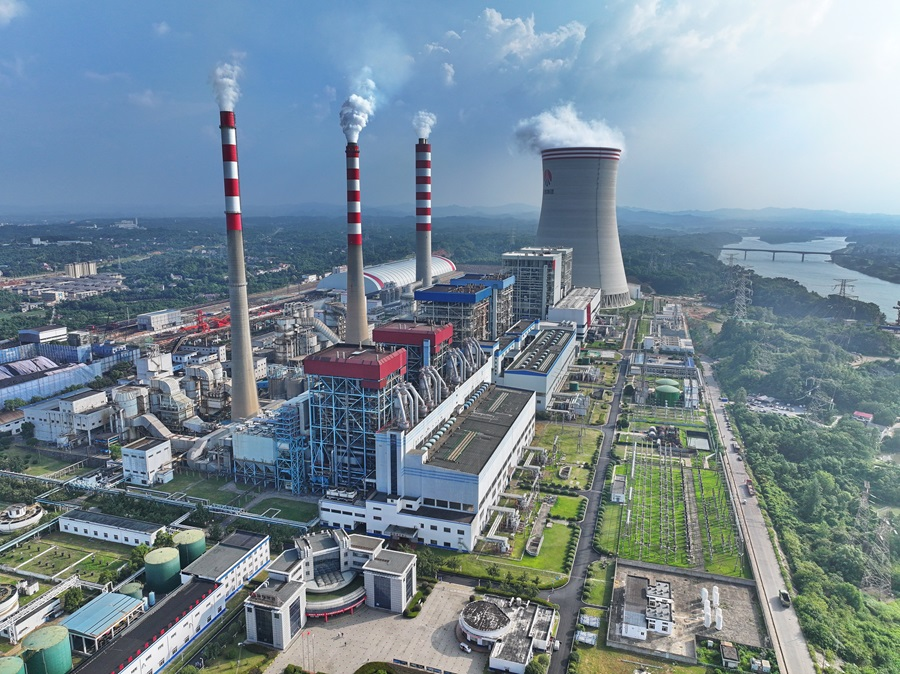
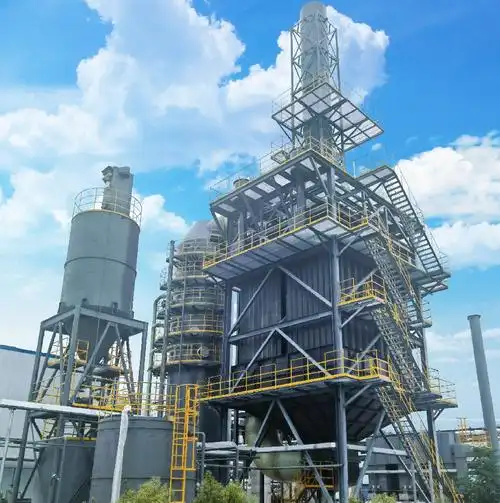
Wet limestone-gypsum desulfurization tower with SCR reactor and wet electrostatic polishing added to an existing coal fired boiler flue gas train.

Thermal Power Plant
Boiler flue gas desulfurization and denitrification, fly ash collection, silo discharge and ash conveying.
Working condition
Recommended configuration
Each row shows the process stage, the machine we normally select and the point that decides whether it performs on site.
| Process stage | Recommended equipment | Selection point |
|---|---|---|
| Fly ash collection | Electrostatic precipitator, dry or wet typeGP-CDPK / GP-WESP Series | Wet ESP as a polishing stage after wet FGD for fine particles and droplets. |
| SO₂ removal | Wet limestone-gypsum desulfurization towerGP-FGD Series | Spray layer number set by inlet SO₂, glass flake lining for chloride resistance. |
| NOx removal | SCR reactor in high dust arrangementGP-SCR Series | Use the existing temperature window to avoid gas reheating, catalyst layers per inlet NOx. |
| Ash discharge and lifting | Rotary airlock, drag chain conveyor, bucket elevatorGP-MS / GP-FU Series | Enclosed casing with hardened liners, interlocked level and speed monitoring. |
| Auxiliary power saving | MV VFD retrofit on ID fan and pumpsGP-VFD Series | Bypass cabinet keeps production running if a drive trips. |
Energy
Ultra-low emission requirements are defined by the local environmental authority and the plant permit. Outlet values are verified by CEMS under actual load and fuel quality.
Related projects

Flue Gas Desulfurization & Denitrification
Wet limestone-gypsum desulfurization tower with SCR reactor and wet electrostatic polishing added to an existing coal fired boiler flue gas train.

Bulk Material Conveying
Rotary airlock discharge valves, drag chain conveyors and a bucket elevator replacing an open ash handling line that leaked dust into the boiler house.
Technical reading

Wet, semi-dry and dry FGD compared with SCR and SNCR denitrification, including temperature window, reagent use, by-products and retrofit constraints.

Which conveyor suits which material, distance, inclination and temperature, and how to match discharge valves with dust collector hoppers.

Affinity laws, load profile measurement, harmonic limits and the metering protocol used to verify a retrofit before and after commissioning.
Send air volume, dust or gas data, temperature and available space. Our engineers reply with a configuration proposal and a budget quotation within 1 working day.
我们仅使用必要的 Cookie 来维持网站运行,并记住您的语言设置和同意选择。不会设置广告或跨站跟踪 Cookie。阅读我们的 隐私政策.